
Quarry Plant
Efficient selection and operation of a quarry plant are paramount to success in the quarrying industry. From drilling to material transportation, each stage directly influences costs and productivity.Choosing a Quarry Plant
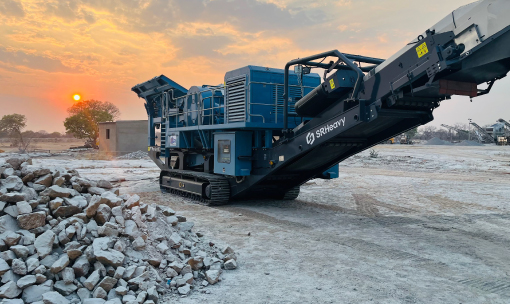
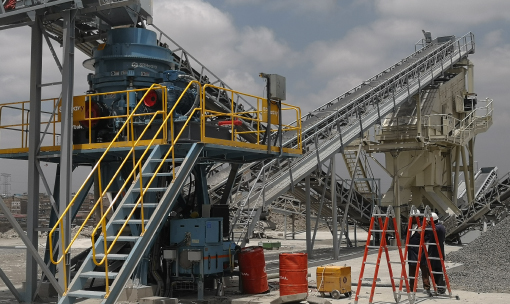
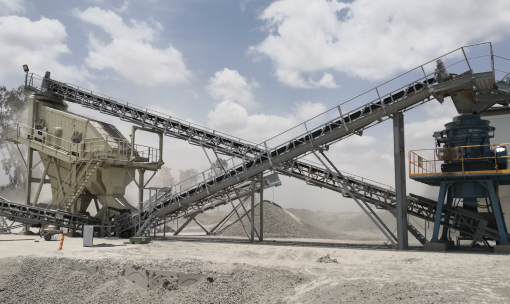
In quarrying, the main activities are drilling, blasting, boulder handling, crushing & screening, material loading and hauling. These are the main determiners of quarrying costs, and thus understanding these costs, how to influence them directly, and how they impact each other is the key to successful quarry development.Crushing plants can be either stationary or mobile. Choosing between them will have huge impact in the quarry future and success. Remarkable benefits can be achieved with the correct choice of solution for your quarry plant which requires integrated approach from all quarry activities.
Quarry Process
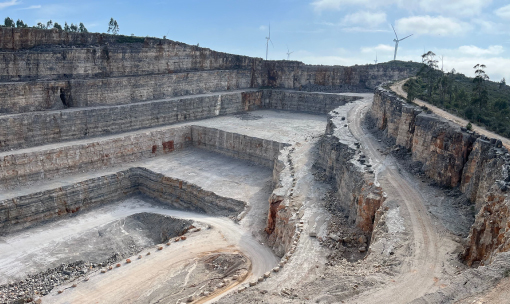
The blasting process has to be adjusted to different types of rock, because they have different properties and the result will be different fragmentation. Actually, optimizing quarrying from the end product yield and cost point of view can be very complicated but, in most cases, it’s enough to understand the basic guidelines on how drilling & blasting, crushing, hauling, etc. impact each other.Drilling and Blasting Process in Manufacturing
Drillhole diameter has impact on costs and also on some key parameters with importance for the later stages in the process as well as end-product yield and quality.Quarry Crushing & Screening
Among others, the following factors must be emphasized:- Handling of oversize boulders: These should never be allowed to enter the feeder for breakage, because in many cases it means that the later stages in the process are starved of material and economy will be poor. Breakage of boulders should be done outside the crushing process, preferably close to the quarry face. - Role of process planning: By using the same equipment, process capacity can be doubled but at the cost of quality. - Selection of stationary vs. mobile configuration. - Selection of the right type of crusher and screen for the application in question.
Loading and Hauling
Loading and transportation are important costs in the quarrying process, with costs increasing substantially due to coarse blasts. This is because larger boulders pose challenges for loading, particularly with increased toe difficulties. The equipment's scope changes as cycle times become more complex and/or longer. The equipment experiences higher wear and requires more maintenance.Quarry Waste Recycling
Quarry waste can be converted into valuable resources with a wide range of applications by using innovative recycling processes and advanced processing technology.Concrete and asphalt wastes, for example, can be crushed and screened to create recycled aggregates for use in new building projects, reducing the need for virgin materials and lowering carbon emissions. Furthermore, metallic leftovers separated during the recycling process can be sold as scrap for recycling, increasing resource efficiency.
Summary of Quarry Development
Quarry development could be summarized as follows: - There is optimal shotrock fragmentation from the total product cost point of view. - Oversize boulder frequency has a significant impact on capacity and cost. - Smaller drillhole diameter produces fewer fines. In many cases, this is considered to be a waste. Crushing cost depends on:- Rock type due to abrasion;
- ‘Case-specific factors’ like life of the quarry, investment possibilities, etc;
- Optimization of the whole quarry process instead of sub-optimization of individual components;
- Inpit crushing can have remarkable benefits.
Partners
Core Partners




Want to know more?
We will be glad to clarify all your questions and make business with you.

Testimonials
TREEA consistently delivers high-quality, reliable spares, exceeding our expectations. Their professionalism and commitment make them a trusted partner, ensuring our operations run smoothly.
Moses Karanja, Crusher Manager, Karsan Ramji and Sons Ltd
Treea Machinery provides robust, advanced equipment, tailored to our needs. Their professionalism, timely support, and reliability enhance our productivity, making them a trusted partner.
Eng. Luis Morgado, Production Director
Contact Us
- +351 244 209 687
- mail@treea-machinery.com
TOP