
Industrial Automation Solutions
MORE THAN 1000 products Available
What is Industrial Automation?
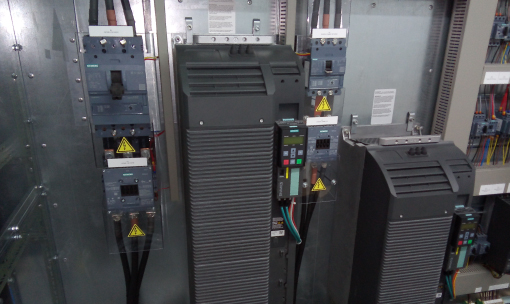
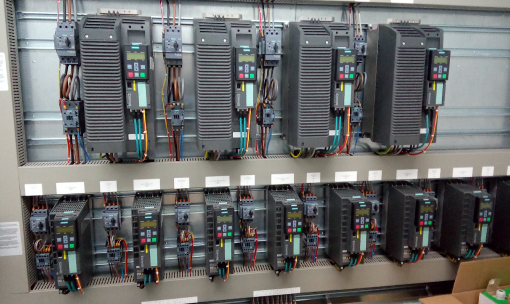
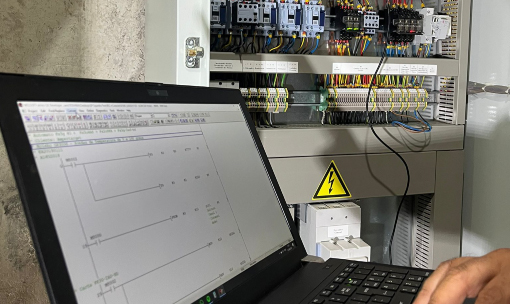
Automation produces goods without human intervention. Electrically, hydraulically, or mechanically. Before programmable logic controllers in the early 1970s and some basic systems today, electromechanical relays, sequencers, unit controllers, and hard wiring automated machines. Programmable controllers replace relays and wires for performance and versatility.
Automation offers several key benefits:
Boosts Capacity and Productivity: By reducing personnel, downtime, and maintenance/repair costs, automation enhances production capacity and efficiency.
Improves Quality: Automation minimizes wear, waste, and inefficient resource utilization, resulting in higher-quality output.
Enhances Safety: Automation systems work faster and more reliably than humans, especially in hazardous or inaccessible environments, thereby improving workplace safety.
Optimizes Processes: Automation systems monitor equipment performance, detect defects, and collect valuable data for analysis, leading to continuous process improvement.
Enhances Operator Experience: Automation enhances operator ergonomics, diagnostics, and overall work environment, promoting better working conditions.
Types of Industrial Automation Systems
Automation system is a system that:
1. Senses its environment with sensors;
2. Collects the sensed data and processes it to information;
3. Reacts according its program logic through its actuators;
4. Interacts with users through Human-Machine Interface, such as lamps, buttons, or a screen, to visualize machine state and accept user requests.
Automation in Aggregate Facilities
Capacity
Automation is ideal for reaching the optimum and remaining there despite distractions. Automatic control reduces capacity-reducing process stops and fluctuations. Automatic control lowers operator involvement, reducing performance limitations. Products and machine wear are normally best when equipment operates at nominal values, or close to their designed best performance point.Product Quality
Full-choke level feeding around the chamber improves efficiency and lowers expenses. Automation systems maintain full choke level feeding and a steady load, allowing inter-particle crushing for better product form, less liner wear, and lower energy usage per ton.Better Availability
Automation options enable the crusher to function at full capacity while maintaining safety margins, preventing underproduction due to manual operation or operator overcautiousness. Automation reduces maintenance downtime by avoiding overloads and mechanical failures.Maximum Efficiency
Constant production maximization and minimal load re-circulation save manufacturing costs. Other advantages include lower wear material prices for crusher liners, screens, spouts, and belts. Automation solutions improve process control, save crusher maintenance costs, maximize crushing capacity, and increase crusher availability. The lowest cost per ton has been attained.Optimized Control
Automation systems compare continuously measured values to predetermined values and respond quickly to changes in load. This lowers the need for human monitoring, and thereby saves significant man-hours.Operation Monitoring
Versatile monitoring and data gathering, including average, cumulative, and predicted crushing values, give a wealth of information that can be used as a management tool to boost productivity.Alarms
All systems have clearly visible alert signals that warn of abnormal operating circumstances and explain why the sensor system broke or failed. These incidents, including all relevant operational measurements, are documented over a set period of time to ensure a prompt resolution of the problem.Remote monitoring and data collection
Mobile and wireless data transmission technologies have improved quickly during the last decade. Management need fast access to plant and equipment performance data. That data can be wirelessly transferred to any computer via the Internet. Examples include running hours, crusher availability, fuel/energy use, and tonnage generated.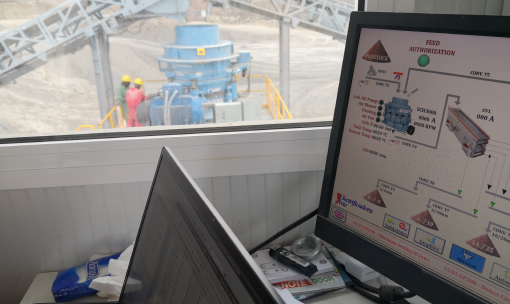
Partners
Core Partners




Want to know more?
We will be glad to clarify all your questions and make business with you.

Testimonials
TREEA consistently delivers high-quality, reliable spares, exceeding our expectations. Their professionalism and commitment make them a trusted partner, ensuring our operations run smoothly.
Moses Karanja, Crusher Manager, Karsan Ramji and Sons Ltd
Treea Machinery provides robust, advanced equipment, tailored to our needs. Their professionalism, timely support, and reliability enhance our productivity, making them a trusted partner.
Eng. Luis Morgado, Production Director
Contact Us
- +351 244 209 687
- mail@treea-machinery.com